

Weaponization of the Pride Flag
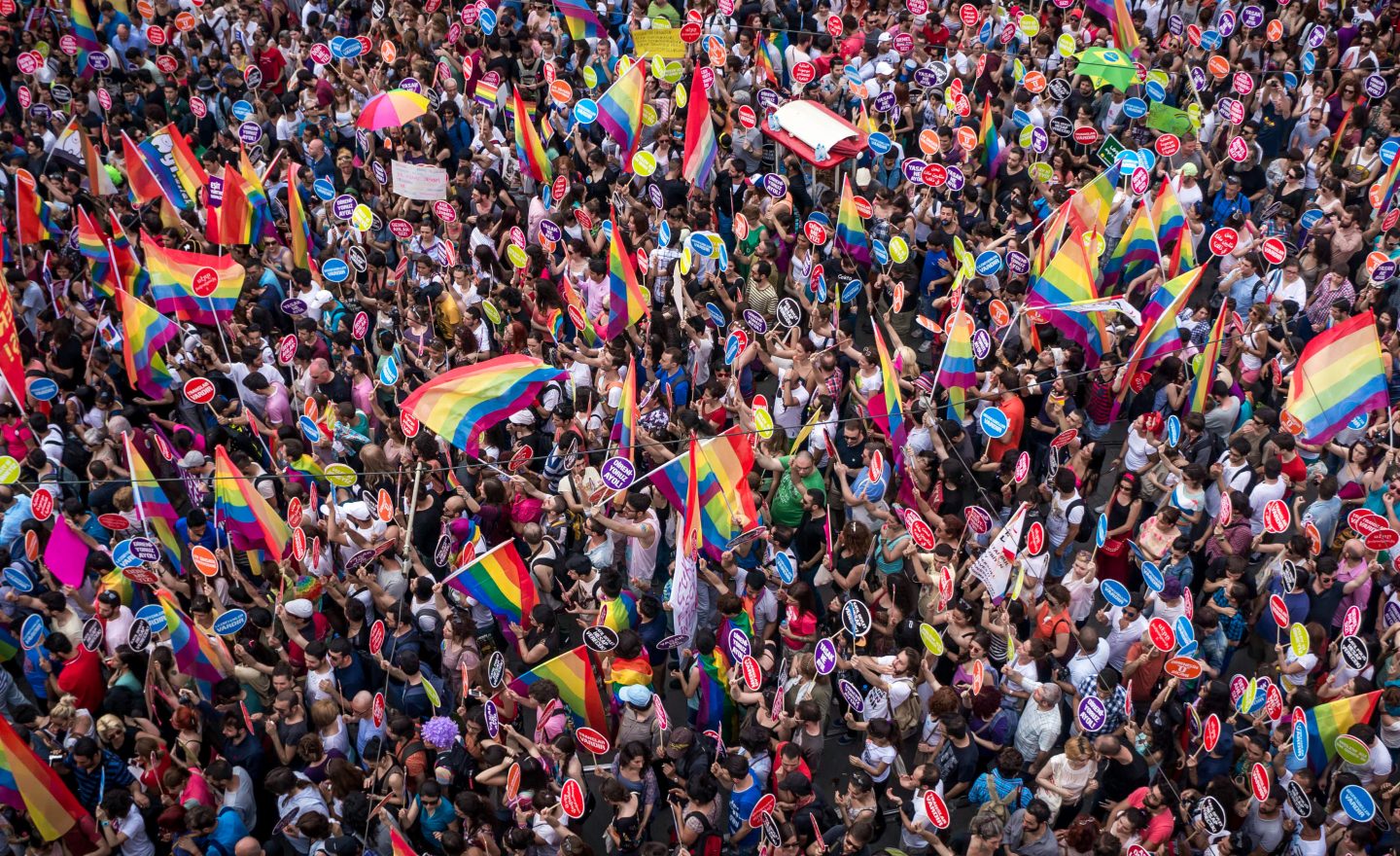
As we celebrate Human Rights Day on December 10th, we are happy to see the continuing progress of our movement, as more and more governments, civil society organizations, and everyday citizens understand how LGBTQI+ rights are human rights.
At the same time, however, we are confronting the global rise of authoritarianism, a trend that encompasses regressive leaders from Russia, Uganda, and Egypt to Florida, Texas, and Tennessee. Reactionary officials and activists are attacking LGBTQI+ rights as a wedge to more broadly undermine democracy, civil society, and human rights for all.
Just the other week, the Russian Supreme Court declared the international LGBTQI+ movement to be “extremist.” Amnesty International warned the accompanying blanket ban on LGBTQI+ advocacy risks “far reaching violations of the rights to freedom of association, expression and peaceful assembly, as well as the right to be free from discrimination.”

One alarming and disheartening phenomenon has emerged in this backlash: the weaponization of the rainbow flag by individuals and groups harboring homophobic and transphobic sentiments who perceive the advancement of LGBTQI+ rights as a threat. What has long been a symbol of liberation and pride for the LGBTQI+ community has now also become a target for those who seek to undermine progress in the ongoing struggle for equal rights.
Historically, rainbow flags have represented a myriad of identities, beliefs, and struggles, spanning centuries and encompassing diverse cultures such as Andean indigenous societies, Buddhism, and the peace movement. However, in contemporary society, the rainbow flag predominantly symbolizes love and community within the LGBTQI+ community. Originally conceived as a beacon of hope, unity, and the fight for equality and acceptance, it has grown into a powerful emblem of the LGBTQI+ movement, symbolizing diversity and inclusion.
Regrettably, some individuals and groups have chosen to co-opt and weaponize this symbol of liberation, thereby using the rainbow flag to promote division and discord. This weaponization is rooted in a complex web of fears, primarily stemming from homophobia, transphobia, and broad apprehensions regarding societal change.
A notable victory for LGBTQI+ rights recently occurred in Mauritius when the Indian Ocean nation decriminalized homosexuality. Mauritius is the latest bright spot in this trend, as LGBTQI+ groups in various countries have pursued legal remedies to address violations targeting their community and to repeal archaic colonial-era laws that criminalize their existence and perpetuate discrimination. While some of these legal battles have led to major victories and the reshaping of society, others have triggered severe backlash, unveiling the multifaceted threats the LGBTQI+ community faces.
Simultaneously, an all-encompassing attack on the queer community continues globally through various means, from physical violence, arbitrary arrests, and state-sponsored legislation aimed at curtailing LGBTQI+ rights to a direct assault on queer culture. In many countries, the rainbow flag has been repurposed as a weapon against the LGBTQI+ community. Even the simple yet radical act of raising the rainbow flag in celebration of Pride has incited vicious backlash and violent government crackdowns against the community with deadly consequences.
The poignant case of Sarah Hegazi exemplifies the fragility of LGBTQI+ lives and underscores the deadly consequences that LGBTQI+ individuals face. Her act of raising the rainbow flag in excitement at a 2017 concert in Cairo resulted in her arrest by the Egyptian government on false charges, culminating in a three-month incarceration under horrifying conditions. Although Hegazi was eventually granted asylum in Canada, the emotional and psychological toll was already exacted, ultimately leading to her to take her own life three years later. This heart-wrenching incident serves as a stark reminder of the profound dangers, both immediate and long-term, that LGBTQI+ individuals confront.
At the heart of these issues lie homophobia and transphobia, the irrational fear and hatred of LGBTQI+ individuals. As societal attitudes evolve towards greater acceptance and inclusion, some individuals perceive these changes as a direct threat to their beliefs and values. Social media platforms often serve as conduits for vitriol and derogatory terms such as “alphabet people,” further contributing to the marginalization of the LGBTQI+ community.
Members of the LGBTQI+ community who boldly live their lives openly or have signs of the rainbow on their social media accounts often report harassment online and hate-filled messages from homophobes and transphobes. These hostilities extend to physical violence, including the burning of rainbow flags and the dismantling of queer safe spaces. Murals painted in rainbow colors on behalf of Sarah Hegazi have even been erased or defaced by individuals who take offense at the rainbow flag and harbor disdain for the LGBTQI+ community.
Moreover, politicians worldwide have exploited fear and animosity towards the LGBTQI+ community for political gain. By positioning themselves as defenders of so-called traditional family values, they have deliberately painted the rainbow flag as a symbol of opposition to everything they stand for, artificially creating a dichotomy between “traditional” and “progressive” values. This situation holds immense significance and danger, as it underscores a form of democratic erosion.
The weaponization of the rainbow flag often coincides with efforts to undermine democratic principles, leading to the enactment of anti-LGBTQI+ policies in certain countries, which suppress the rights of LGBTQI+ individuals and curtail freedom of expression, all driven by the fear of expanding LGBTQI+ rights. This trend raises serious human rights concerns, as LGBTQI+ individuals are disproportionately subjected to discrimination, violence, and persecution. The weaponization of the rainbow flag exacerbates an already hostile environment, further endangering their safety and well-being, occasionally resulting in tragic outcomes, as in the case of Sarah Hegazi.
In the United States, a troubling trend has emerged within this year’s appropriation bills in Congress. Virtually every appropriation bill proposed in the House of Representatives has contained a provision that explicitly prohibits the display of the Pride flag at embassies or federal government buildings. A stand-alone bill in Congress, supported by 45 cosponsors, also aims to formalize this prohibition at U.S. government facilities, although it has not received a vote or a hearing and will hopefully die in committee.
Despite these anti-LGBTQI+ legislative proposals, a noteworthy defiance exists among most U.S. embassies worldwide, as they continue to stand in solidarity with democracy and human rights advocates by disregarding Congress’s attempted restrictions and proudly flying the Pride flag every June. However, this situation sends a potentially contradictory message and could begin to have a chilling effect on embassy engagement with LGBTQI+ communities, even if the anti-Pride flag regulations are never enacted into law.
In an additional distressing development, private companies have become targets due to their association with LGBTQI+ content. In Malaysia, the government has banned products deemed as LGBTQI+-related, specifically targeting rainbow-themed Swatch watches, asserting that they are detrimental to morality. Similarly, the government of Saudi Arabia is intensifying its crackdown on rainbow-colored toys and products in shops in the country’s capital.
Furthermore, Netflix and Hulu recently faced cyberattacks perpetrated by a Sudan-based group of hackers identifying themselves as “Anonymous.” These groups harbor not only a vehement aversion to the LGBTQI+ community but also to any manifestation of queer culture. Their objectives, apart from diminishing the community itself, encompass broader political aims to undermine human rights advancements that benefit LGBTQI+ people. Links between these groups and the Russian government’s anti-LGBTQI+ propaganda law and state-backed moral panic have been documented, suggesting a broader pattern of oppression and erosion of LGBTQI+ human rights.
The weaponization of the rainbow flag represents a disconcerting trend that poses not only a threat to LGBTQI+ rights but also to democratic values and human rights at large. This issue, rooted in homophobia and fear of societal change, has far-reaching consequences, culminating in the erosion of democratic principles and the endangerment of LGBTQI+ individuals. Vigilance and advocacy are essential to counter this troubling phenomenon, as it stands at the intersection of prejudice, political manipulation, and human rights abuse. Addressing this multifaceted challenge necessitates a concerted effort from global society to ensure the continued advancement and protection of LGBTQI+ rights, standing as a testament to the enduring struggle for equality and acceptance.
The Pride flag, as a symbol of hope and freedom, not only signifies LGBTIQ+ equality but also reinforces the understanding that LGBTQI+ rights are human rights. As Ambassador Nichols aptly stated in an OpEd in a newspaper in the Bahamas explaining why U.S. embassies fly the Pride flag, the flag is ultimately a symbol of universal, indivisible human rights, and of the diversity of the LGBTQI+ community and of the United States itself.
In moving forward, it is imperative that embassies not only insist on flying the Pride flag but also continue to reach out to support LGBTIQ+ communities actively and meaningfully across the globe. Prioritizing education and empowerment for LGBTIQ+ individuals will foster increased awareness and contribute to greater acceptance and tolerance within society. On Human Rights Day and every day, this commitment reflects a collective stride towards equality, inclusion, and human rights for all.