

The War in Gaza Impacts All of Us and Democracy Too
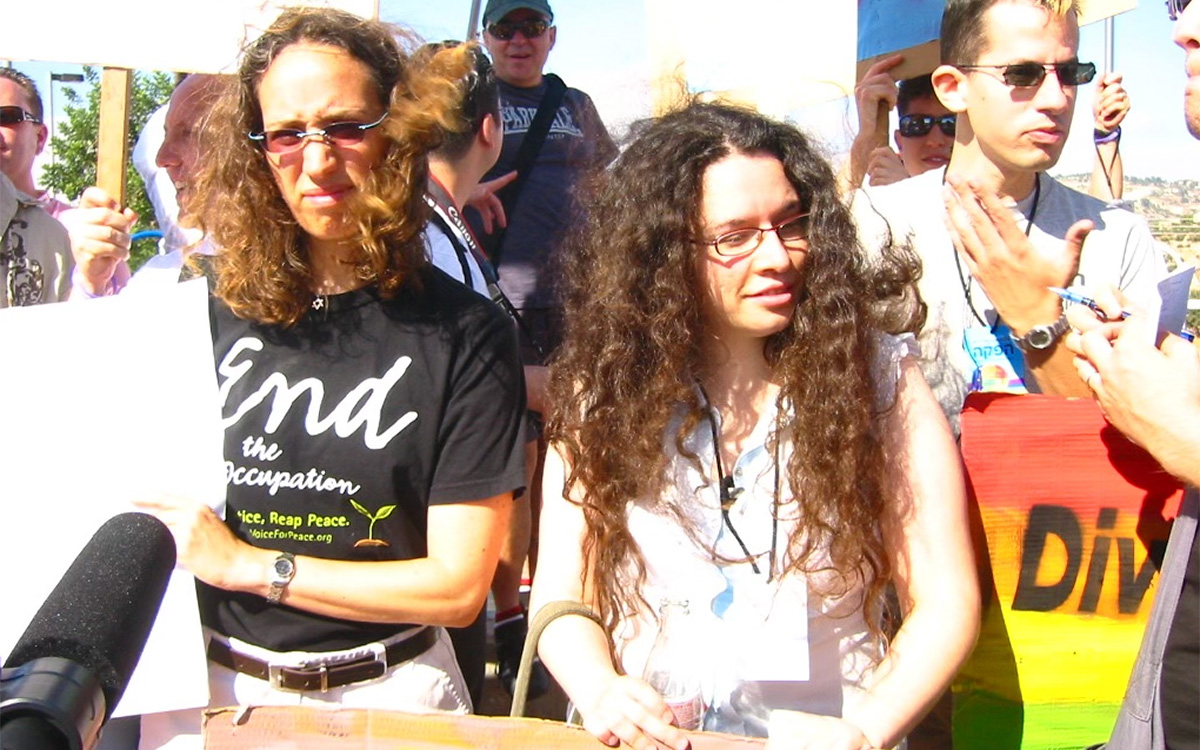
By Julie Dorf, Co-Chair of the Council for Global Equality
- This essay was originally published earlier today in the Washington Blade.
- Content Advisory: this is much longer than CGE’s usual posts. It shares my personal experience and perspective and does not represent an organizational statement. Clearly, it addresses Israel/Palestine, so if you can’t handle that, please don’t read!
(January 11, 2024) As a leader in the LGBTQI+ movement and Co-chair of the U.S.-based foreign policy organization the Council for Global Equality (CGE), I am calling on my colleagues in the progressive foreign policy community to urgently discuss alternative policy solutions to our government’s support of the deadly war in Gaza and collectively begin demanding solutions that respect the dignity, rights, and security for all.
The Council for Global Equality (CGE) works at the intersection of international human rights, U.S. foreign policy, and LGBTQI+ communities. We primarily focus on influencing the U.S. government’s policies, programs, and foreign assistance to do more good in the world, recognizing that our democracy typically only does the right thing when its citizens demand it – whether through elections or ongoing civic engagement by organizations such as ours. We also recognize that, deservedly or not, the United States wields outsized power in the world; as responsible citizens of this mighty country, it is therefore incumbent on us to actively engage and try to direct its power towards good. Our organizational principles include key tenets such as “freedoms abroad and freedoms at home are linked,” “democracy can only be rooted in secular, inclusive values,” “equal treatment is at the heart of human rights,” and “one population’s rights cannot transcend those of another.” The full statement of principles is on our website.
When Hamas launched its terrifying attacks in southern Israel on October 7, followed by Israel’s revengeful response in Gaza, I thought at first that this was not a CGE issue. As a progressive Jew, I was mostly consumed by my own relationship with the ongoing occupation, and I feared for my friends in the region. I was horrified and heartsick, glued to Al Jazeera and other news sources. But I was not at all surprised by the attack, except perhaps that it had taken this long for a major uprising by Palestinians. I reached out to activists, friends, and family in Israel, Palestine, Lebanon, and Egypt. I felt no contradiction being equally upset by the loss of lives on all sides and holding multiple truths at once. Yes, Hamas is a terrorist organization that brutally murdered my people. Yes, Israel has been occupying, persecuting, and actively undermining a Palestinian state for its entire existence. And yes, the government of the United States and its Jewish community have both been enabling this horrible injustice for as long as I can remember. This crisis was just more of the same but on a much, much more painful scale.
My Position on Palestine and Israel
I grew up in a staunchly Zionist environment, visited the region multiple times (Israel and the West Bank and Gaza), and evolved through my human rights career into a proud Jewish anti-Zionist. I believe in the land of Israel being a vital, safe, and sacred homeland for Jews and Muslims, as well as for Christians, Druze, Armenians, Samaritans, and others.
I do not, however, believe in a Jewish supremacist state, which is the way that Israel’s current policies have been constructed, believing that only by having a majority of Jews in the country of Israel can it be a secure Jewish “homeland.” I believe it can and must be a secure homeland for different religions simultaneously. Indeed, if you’ve ever visited Jerusalem, you know it already is a homeland for Jews, Christians, Muslims, and Armenians (albeit not safe). Yes, Netanyahu is perhaps the most far-right authoritarian leader we’ve seen in Israel. But long-time policies from urban development, road construction, and water to the separation wall and vast numbers of political prisoners, and other Israeli government policies have been constructed to maintain the supreme rights of Jews over Palestinians. These policies that are intended to maintain inequality by ethnicity are simply inherently incompatible with a genuine democracy. At this moment in the world, when democracy needs to be actively defended in so many countries, an exception clause for Israel is both indefensible and counterproductive.

My political positions on Israel and Palestine have stirred up great pain and conflict in my family and community. But I have been committed to talking to my own people – in this case, American Jews – about these issues because that is where I can have the most influence to make change, however small that may be. Many progressive Jews–and particularly younger generations–share my beliefs but are afraid of being ostracized from their Jewish communities or families or being labeled a “self-hating Jew.” I know that I am a proud Jew.
Antisemitism and Anti-Zionism
I am also no stranger to antisemitism—even working in the LGBTQI+ global movement, I have experienced my share of antisemitism. It mostly takes the form of microaggressions, such as comments about “your banker friends in New York” or “I won’t succumb to your Jewish guilt moves.” Then there was the moment when a presenter at a queer conference on closing civic space in Poland used a political cartoon from a local newspaper that had a picture of an Orthodox Jew with a huge nose, wearing a star of David that said “NGO” on it – but didn’t recognize that NGO was overlaid on a profoundly antisemitic image. Or the time when someone posted a conspiracy theory full of lies that “co-religionist George Soros” was somehow connected West Bank settlement building on a large global queer listserv, and the moderator of the list told me that my concerns were unfounded and that “the post was not antisemitic.” And I’ll definitely never forget when an activist in Malaysia who had never met a Jew before asked to feel my head for my horns. At least they asked for consent!
Today’s genuine rise in antisemitism around the world is more overt and scary. I’m used to armed security guards at the entrances to Jewish institutions such as our schools, museums, and synagogues to guard against the occasional violent act of antisemites. But this increased level of hate speech, online antisemitism, Nazis in public, and murder threats are understandably terrifying my community. This is precisely why the distinction between this very real rise in antisemitic violence and anti-Zionist expression is critical to distinguish.
It is dangerous for Jews and others to conflate antisemitism with anti-Zionism because that conflation misdirects attention from genuine antisemitic violent threats and increases polarization in a year when our unity to protect democracy is more important than ever. Further, it is terrible for the freedom of thought and speech, undermining legitimate calls for justice for Palestinians and silencing people from expressing their true thoughts and reactions. All these things are harming U.S. foreign policy and making U.S. citizens less safe.
We can agree to disagree about the connotations of “from the river to the sea” or the word “intifada,” – but it is not inherently antisemitic to wish for equality in that location or to desire a one-state solution to the conflict between the state of Israel and the stateless citizens of Palestine or to wish to organize peaceful resistance to oppression (such as BDS). This is legitimate political discourse, essential to finding a peaceful solution to this ongoing conflict, whether that be a one-state, two-state, confederated, or some other solution we haven’t yet imagined.

Further complicating matters, progressives tend to minimize antisemitism because of Ashkenazi white skin privilege and class privilege, whether real or imagined. Yet Eastern European Jews weren’t considered “white” for many decades, Sephardic Jews are still not considered “white,” and there is increasing visibility of Jews of color. Regardless of the color of our skin, we’ve not been part of any dominant culture for most of our existence as a people – until the creation of the Israeli state. But in the current leftist paradigm of “settler colonialism” as it applies to the state of Israel (which is, in fact, what the early founders of Israel called themselves), often the role of historical and current antisemitism is either dismissed or ignored. This is problematic and limits solidarity. It adds to the lopsided empathy that occurs in both directions and limits civil discourse and healing.
There is no doubt that antisemitism over time, and particularly the Holocaust, played a critical role in the creation of the State of Israel, as well as in the historical trauma and epigenetic fears that live inside so many of us Jews. That trauma was further inflamed by Hamas’s attack on October 7, just as the trauma of the Nakba was reignited for Gazans when Israel’s counter-attacks began, and 90% of Gazans were forced to leave their homes, regularly going without food. It might seem obvious that this sense of collective victimhood does not give license to victimize others, but it certainly creates a major blind spot in Jewish identity. It is overdue for Jews around the world—and especially in Israel—to update our story and live up to our stated values as a people committed to “Tikkun Olam,” or to repair the world. As painful as it is, we must take a hard look at the missteps in the history of Israel and rectify them urgently. We must face the current crisis and rise in antisemitism with the clarity that anti-Zionism is not synonymous with antisemitism. We must also be able to sit with the discomfort or sense of threat from anti-Zionist arguments or even chants, or genuine discourse about a different role for the U.S. vis-à-vis Israel, rather than reflexively labeling all of that antisemitic.
Legitimacy in Global Movements
So, when activists in the Middle East began asking queer groups to show up in solidarity with Palestine and, in particular, to join the calls for a ceasefire, I had no problem as a co-chair of CGE to craft a statement on behalf of our organization. It was not only consistent with our stated principles, but it was also a question of legitimacy for us in our global movement. What so many Americans do not quite understand is that much of the world considers Israel a pariah state; as such, the “special relationship” the United States maintains with a country considered akin to apartheid South Africa is very hard to explain or defend. Yet here in the United States, we get a totally different perspective, highly influenced by the commercial media, by mainstream Jewish community institutions (many of which are quite out of step with their own constituents, particularly younger people), and also by the strong forces of the intensely Zionist Christian right (Did you know that Christians United for Israel has more members than AIPAC?). And perhaps, as Peter Beinart posits, as Americans, we identify unconsciously with Israelis because we, too, do not wish to rectify our past treatment of Native Americans in our own founding of our country. This creates a grossly asymmetrical empathy for the “Israeli side” (which, by the way, is hardly monolithic) for many in the United States.
Yet, for many of us in the fields of international human rights, global development, or foreign policy, we engage regularly with colleagues outside of the United States who have a more balanced concern for the Palestinians. Indeed, we cannot do our work very effectively without such solidarity and trusted relationships. Consequently, it is very difficult to sustain an organizational position that justifies the levels of U.S. aid to Israel (over $3B annually), particularly the extra $14.5B in military aid for their war on Gaza, some of it circumventing required Congressional notifications, which everyone knows by now has overwhelmingly killed civilians and children and over 20,000 people. Then to see that with the U.S. government’s enormous investment, the Israeli military and intelligence could be so arrogantly incompetent, caught without any plan or reasonable response to the October 7th Hamas attacks, makes that incredibly large investment even more questionable. And yet, most D.C. organizations still simply shy away from this issue.
Pinkwashing and impact on LGBTQI+ Movement
For the global LGBTQI+ movement, “pinkwashing” has further enraged many in queer communities across the globe. Pinkwashing is the promotion by the Israeli government (or any other government) of its pro-LGBTQI+ policies to intentionally distract from its human rights abuses against Palestinians (or other horrific rights abuses). In truth, all the rights that have been disingenuously touted by the Israeli government to show a contrast to surrounding Arab states in the region were hard-fought and won by the country’s LGBTQI+ community itself through the courts, not simply handed to the community by the State of Israel. This has been a key part of the intentional campaign by the Israeli government to maintain an image that the country is more similar to Western democracies and, therefore, more deserving of their support.
But in many ways, it has backfired when it comes to LGBTQI+ communities and certainly alienated Israeli LGBTQI+ civil society from the global movement, and in particular from other LGBTQI+ organizations in the region. It is considered so taboo to be connected to Israel that no other Middle East or North Africa (MENA) representatives would show up to a queer MENA event if Israeli civil society were even invited. (And, yes, there are LGBTQI+ groups large and small in Jordan, Lebanon, Iraq, Iran, Tunisia, Morocco, etc.) Israel’s pinkwashing also helped spawn stronger queer support for Palestinians and for the boycott, divestment, and sanctions (BDS) movement. A clear example of this pinkwashing continues now during the war, when the State of Israel’s official X (formerly Twitter) account showed an IDF soldier unfurling a rainbow flag in front of a tank in Gaza and another one, claiming to be “in the name of love,” in front of a destroyed village. For many of us, this was beyond offensive, it was stomach-churning.

For all of these reasons, CGE issued our statement calling for a ceasefire in late October. Most of our organizational members were very pleased with its release, except for the ADL, which chose to end its membership in CGE over our differences on this issue. Human Rights Watch and Amnesty International, both long-standing CGE members, have strongly criticized this war, documenting war crimes and other human rights violations, both by the Israeli state against Palestinian civilians and by Hamas against Israeli citizens. But other than those large human rights organizations, the most vocal members of the foreign policy community in Washington have been the large humanitarian assistance providers, which have passionately argued for a ceasefire. The visible resistance by Jewish Voice for Peace and other progressive Jewish organizations, together with Palestinian rights organizations, have been the primary other civil society entities articulating a different vision for U.S. policy on Israel and Palestine. Between the street protests, potentially losing the next generation’s vote, and the upset from federal employees themselves, this does seem to be getting the Biden-Harris Administration’s attention, forcing very small shifts toward using its leverage to reign in Israel’s military violence.
Where is the U.S. Foreign Policy Community?
So, where is the rest of the Washington foreign policy community? Clearly, others must have similar concerns for their credibility with partners around the world during this crisis and feel uneasy every day as the news appears. How can we not do better than this to hold our government accountable to our values of equality and justice? Where are the media watchdog organizations, and why are they not challenging such asymmetrical coverage of the war? I understand that people are scared to “take a side,” to offend someone, to lose big donors, and to lose legitimacy in the eyes of our U.S. government allies. God forbid we get canceled by saying the wrong thing or making a mistake.
But we must do better than that; we must have the courage to advocate for a more balanced U.S. policy on Israel and Palestine and to call on the Biden Administration to be a more honest broker in the conflict. If foreign policymakers believe that the United States needs to be Israel’s best friend, to be a trusted nation they will listen to, then we certainly have paid our dues by now. We must leverage decades of expensive investments more strategically and effectively.
It is time for the progressive foreign policy community in the United States, together with principled Jewish organizations, Palestinian leaders, and others sincerely invested in peace to come together to articulate a better way forward for U.S. foreign policy. We must demand conditions on U.S. aid, not just on ending illegal settlement-building in the West Bank, but on actually dismantling settlements if the U.S.-stated policy goal of helping to create a Palestinian state is sincere. We must condition military aid appropriately to avoid its use in war crimes. We must demand and help secure the release of Palestinian leaders in Israeli prisons who could become the more legitimate, moderate leaders of the next iteration of the Palestinian Authority. This would undermine the Hamas movement far more effectively than the current military campaign is doing by offering better leadership options. We must demand the release of the Israeli hostages in Gaza and the Palestinian political prisoners in Israel. And we must end the immense blank check support of billions of taxpayer dollars to Israel by requiring a genuine restart of peace negotiations. These are just some of the policies that we should be advocating for – the point is that we need to have those debates as a matter of urgency within our own foreign policy communities in Washington.
As an LGBTQI+ U.S. foreign policy organization, we should be a part of those discussions, not just because queer Palestinians and queer Israelis are impacted, and not just because it’s urgently critical for the safety of all Palestinians and Israelis, but because, indeed, we are all impacted. Americans will be safer. Jews will be safer. Democracy might even be safer.