

Priorities for the 118th Congress
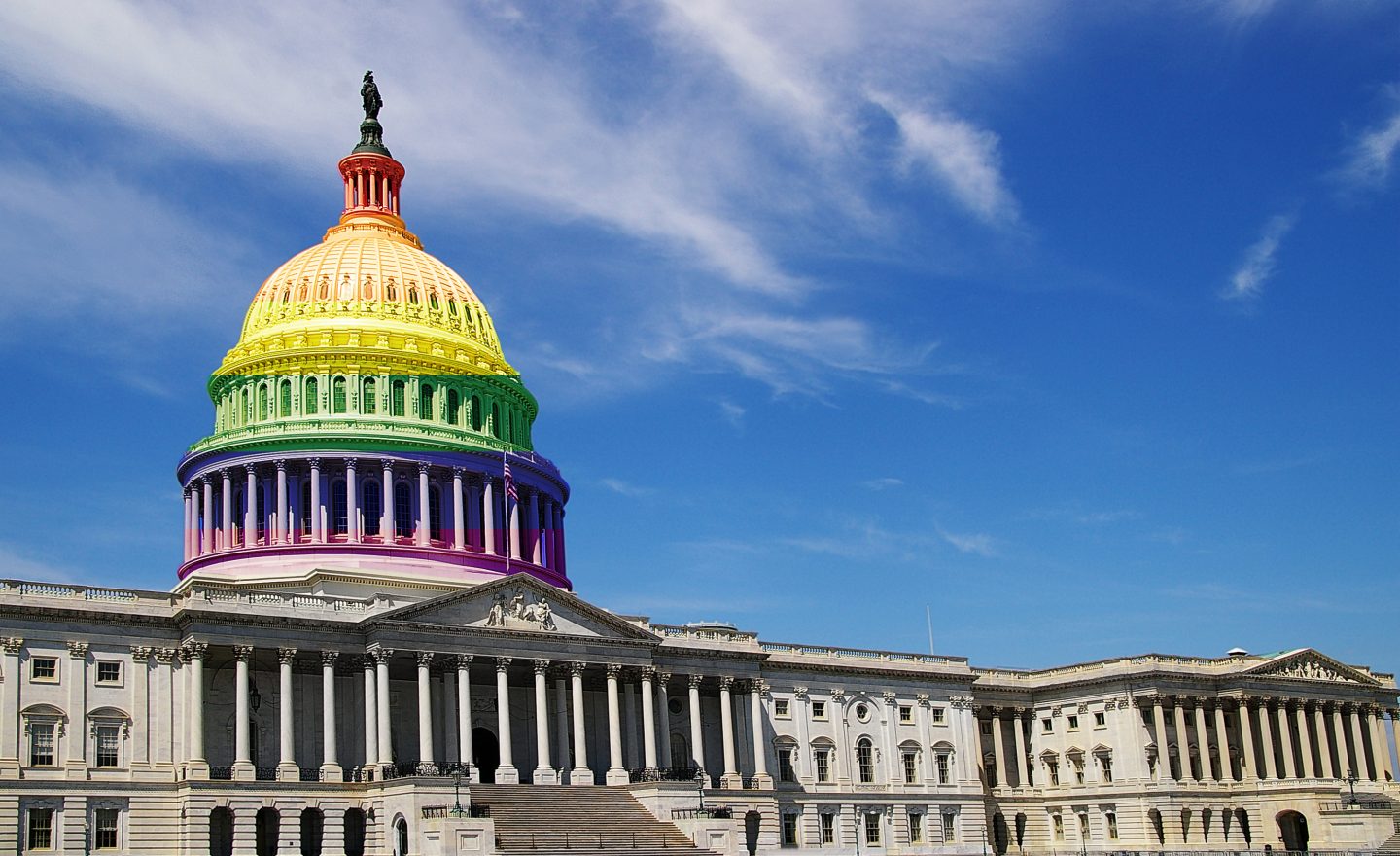
The 118th Congress is off and … well, “running” is not quite the right verb.
The Council for Global Equality understands — as do our member organizations, our partners on the Hill and in the Administration, and in the movement for LGBTQI+ human rights — that the 118th Congress is going to be a challenging one, especially given the deals that Speaker McCarthy had to cut within his own party in order to win the gavel and move forward. The far-right renegades in the Republican Party are clearly no friends of the LGBTQI+ community, nor of promoting human rights, civil society, and democracy writ large.
We’re going to hear more from the homophobic, transphobic, and anti-gender voices in the House of Representatives in the 118th. Champions need to be ready for malicious amendments, investigations, and other purported oversight. In the last Congress, two bills were introduced to prohibit federal funding of drag shows, and we should anticipate more such attacks against drag shows; programs that include the most marginalized members of the LGBTQI+ community, including sex workers; and transgender persons more generally.
All that said, we are most definitely neither going to sit on the sidelines nor operate solely from a defensive posture for the next two years. So, what can we accomplish and what do we have our eyes on, for better and for worse?
Appropriations
Money, money, money. Notwithstanding the debt-ceiling issue, the government will need to be funded. We’ll continue to request a minimum of $40 million for the Global Equality Fund at the State Department and $30 million for the Protection of LGBTQI+ Persons at USAID. LGBTQI+ civil society organizations face significant gaps in resourcing and investments, and this funding would provide additional support to the State Department and USAID to achieve the goals set out in President Biden’s Memorandum on Advancing the Human Rights of Lesbian, Gay, Bisexual, Transgender, Queer, and Intersex Persons Around the World.
In reality, however, given the polarized House and the split with the Democratically controlled Senate and White House, we’re likely to see continuing resolutions that maintain our December 2022 Omnibus funding of $25 million for the Global Equality Fund at the State Department and $25 million for the Protection of LGBTQI+ funding at USAID. But champions will have to stay vigilant to stave off targeted attacks on these funds, which themselves remain insufficient. We especially need to be prepared for attacks that seek to zero-out these funding lines altogether.
Other Congressional Actions
Members of Congress can use their Committee roles to utilize committee hearings, including annual budget hearings, confirmation hearings, and private meetings with government and non-government officials to raise global LGBTQI+ issues, especially in problem countries. Anytime our Congressional champions of LGBTQI+ human rights travel internationally, they should meet with government officials and civil society representatives to promote a fully SOGIESC-inclusive human rights and development agenda.
Uzbekistan is one such problem country, and we call on our allies in Congress to:
- Include LGBTQI+ human rights protections in all reintroduced legislation and resolutions relating to Uzbekistan, including Reaffirming United States-Uzbekistan Relations and the Uzbekistan Normalized Trade Act.
There will be many other such problem countries — especially ones where security relations are critical to U.S. foreign policy objectives more broadly, including Egypt, Turkey, Indonesia, and Uganda — that are seeking large financial and military assistance in this Congress. They, too, should receive heightened scrutiny regarding their human rights records from lawmakers.
In addition, we urge the Senate Foreign Relations Committee to hold a hearing on LGBTQI+ human rights challenges before the full Committee, as well as within appropriate subcommittees, to explore the deteriorating human rights landscape impacting LGBTQI+ persons globally. The House Foreign Affairs Committee held the first such hearing in June 2021 with a dynamic combination of government and civil society witnesses. The Senate Foreign Relations Committee has yet to follow suit — and the time is right for such a long-overdue similar hearing in the Senate.
Legislation
PEPFAR turns 20 this year and needs to be reauthorized. This program holds sweeping implications for global LGBTQI+ human rights. No U.S. program provides more health services to LGBTQI+ people worldwide, and we remain committed to the program’s goals, even as we strive to decriminalize sexual orientation and gender identity and to end other criminalizations that drive the epidemic. We urge the clean reauthorization of PEPFAR as an urgent priority.
Co-sponsor and promote these forthcoming global human rights bills. We realize that they are unlikely to pass the House in this current political context, but we hope that one or more of these bills will receive a markup in the Senate Foreign Relations Committee and that key sections of these bills will make their way into other must-pass legislation in this Congress.
- Greater Leadership Overseas for the Benefit of Equality (GLOBE) Act: Led by Senators Markey, Shaheen, and Merkley in the Senate and by Representative Titus in the House of Representatives, this comprehensive bill provides a roadmap and the necessary tools for U.S. leadership to advance the human rights of LGBTQI+ communities around the world, including combating criminalization of LGBTQI+ status, expression, or conduct.
- Global Respect Act: Led by Senator Shaheen and Representative Cicilline, this bipartisan bill imposes visa-blocking sanctions on foreign individuals responsible for, or complicit in, violating the human rights of individuals due to actual or perceived sexual orientation, gender identity, or sex characteristics.
- International Human Rights Defense Act: Led by Senator Markey and Representatives Garcia and Jacobs, this bill protects the human rights of LGBTQI+ individuals by codifying the position of Special Envoy for the Human Rights of LGBTQI+ Persons at the State Department; requires the Department to develop a global strategy to respond to criminalization, discrimination, and violence against LGBTQI+ persons internationally; and codifies reporting on the human rights of LGBTQI+ persons in the State Department Country reports.
- Global Health, Empowerment and Rights (HER) Act: Led by Senator Shaheen and Representative Lee, this bipartisan bill would permanently end the Global Gag Rule, an intermittent presidential policy that had a disproportionate negative impact on the health and rights of already marginalized LGBTQI+ communities.
As we embark on the 118th Congress, we see a rise in extremist policies that seek to deny the fundamental human rights of LGBTQI+ persons in all corners of the globe, including many states here in our own country. As the landscape deteriorates, it is imperative that Congress continues to lead on the world stage by funding effective coalitions to align our human rights diplomacy and challenge homophobic and transphobic human rights abusers. Now more than ever, we look to champions in Congress to amplify efforts by the Biden-Harris Administration to reclaim our global stature in support of human rights for all marginalized communities.