

A Conversation with David Cicilline, Global Equality Champion
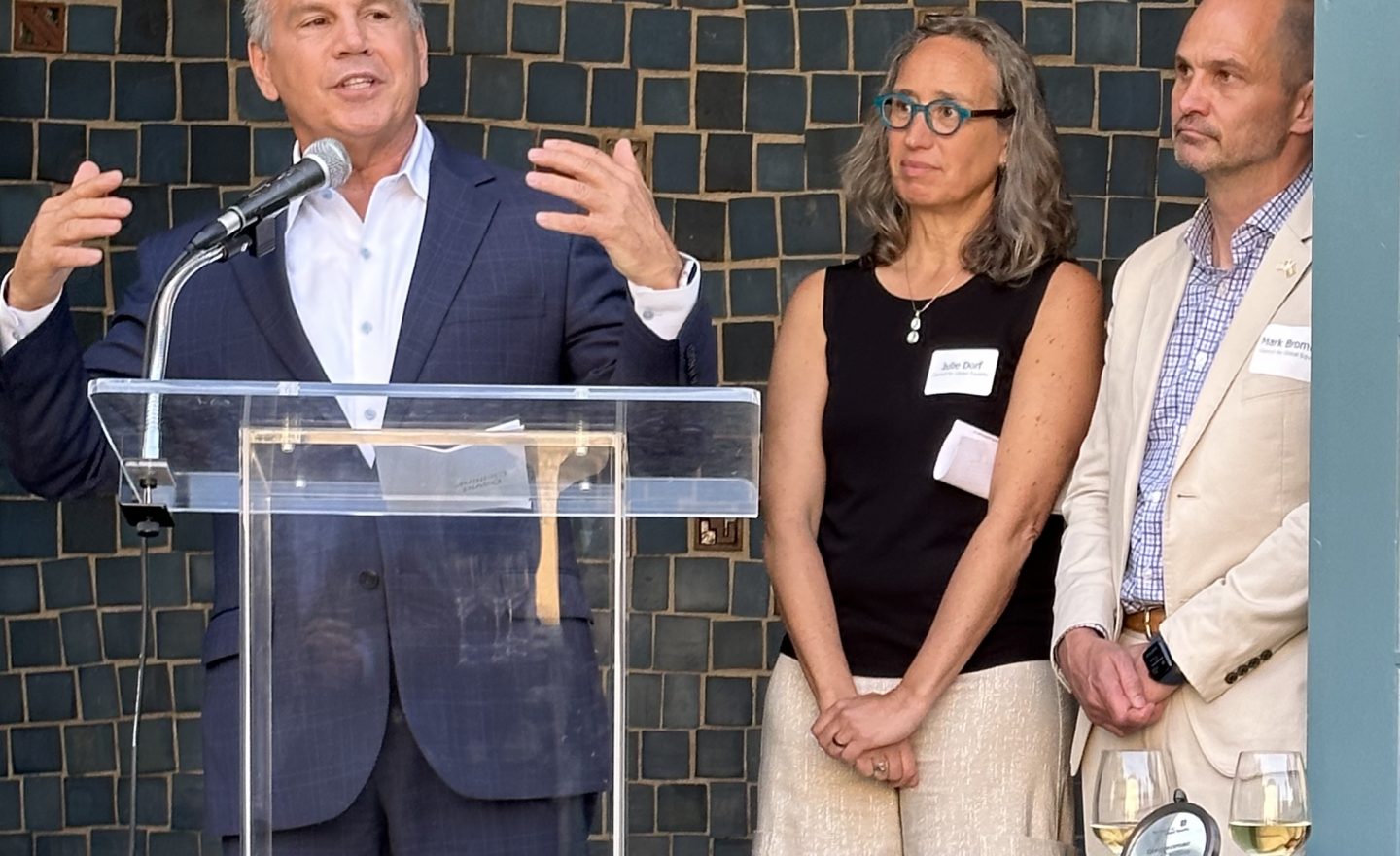

Through his dozen years in Congress, Rep. David Cicilline (D-RI) has been a steadfast champion for LGBTQI+ human rights through his leadership on the House Foreign Affairs Committee and within the Congressional Equality Caucus. Now, as Congressman Cicilline steps away from Congress to lead the Rhode Island Foundation, CGE has recognized his legacy by honoring him with our Global Equality Award at a reception last week.
Rep. Cicilline has been an unwavering human rights advocate for LGBTQI+ people at home and around the world, both when we’ve had the political winds at our back and when they’ve come at us headfirst, as we see in the House of Representatives today. Since his first days in Congress in 2011, he deftly used the levers of power to stand up for LGBTQI+ people. He and his outstanding staff worked closely with CGE on letters to foreign leaders, on critical legislation for our communities such as the Global Respect Act and the Equality Act, and particularly on appropriations for our nation’s global LGBTQI+ funding programs.
Last year, in one of our greatest successes, in collaboration with his office and with HRC, we together managed to double the amount of foreign assistance to LGBTQI+ people around the world – getting $50 million in the omnibus budget bill.
We also thank Congressman Cicilline for taking a few minutes to talk with us about his work for global LGBTQI+ human rights.

Rep. Mark Takano (D-CA, left) and former Rep. David Cicilline (D-RI, right)
What does receiving the Global Equality Award mean to you?
It’s a great honor — to be one of only three recipients, and to stand in the company of Tammy Baldwin, Samantha Power, and Susan Rice, it’s really humbling and affirming. I’ve been an admirer of the Council’s efforts for many years, but really came to understand the power and import of its work around the world during my time in Congress. I’m so glad to have been a part of supporting that work and hope to continue to do so.
How did you become interested in global LGBTQI+ human rights?
As a member of the LGBTQI+ community, an attorney, and former lawmaker, it has always been important to me to use the influence that I have to ensure that those in power use their diplomatic, political, and economic leverage to oppose human rights abuses and to support the people and organizations that are helping to support free and vibrant civil society around the world. I have always believed in equality. It’s a profoundly American idea and a founding principle of our great country. And it is our responsibility to share that sentiment — and more importantly, the actions that align with it — in all our efforts.
How has supporting an LGBTQI+-affirming human rights policy changed since you first came to Washington, DC?
The ranks have grown, and at the same time our work has becoming more challenging in many ways.
Here’s what I mean: When I was first elected to Congress, 12 years ago, there were just three of us who were members of the LGBTQI+ community. Since then, we’ve grown to 10 colleagues in the House and two in the Senate. We know that when a member of our community is elected or appointed to any office, we understand the responsibility to represent the constituents in our district, state, or nation, but also the additional responsibility of representing our community too.
For me, that has meant advocating for human rights and LGBTQI+ equality, both at home and abroad, as a member of the Judiciary and Foreign Affairs Committees.
We’ve made so much progress, but we’ve also faced the possibility of a backwards slide. There are members of Congress and people in power at all levels of government who fundamentally reject the idea that our community deserves full equality as citizens of this country.
We have to continue to be vigilant, as we were in the wake of an alarming opinion by Justice Thomas [concurring in last year’s Dobbs v. Jackson ruling striking down the right to abortion] in which he stated that he would like to revisit the Supreme Court’s case establishing marriage equality as the law of the land. I had the privilege of co-leading the introduction of the Respect for Marriage Act to ensure federal protections for married same-sex and interracial couples — which is now law.
Are there particular accomplishments in your work to promote LGBTQI+ human rights through U.S. foreign policy that you’re especially proud of?
It has been my honor to serve as a senior member of the House Foreign Affairs Committee and to fight to ensure that U.S. foreign policy is holding governments abroad accountable for their failure to prevent violence against LGBTQI+ individuals and for advancing explicitly anti-LGBTQI+ policies.
I’m grateful to my colleagues in the House for passing the Global Respect Act, a bill that would help prevent international violators of LGBTQI+ human rights from entering the United States and enhance U.S. State Department tracking and reporting of violence and other human rights violations against LGBTQI+ individuals in foreign countries.
And I’m so proud to have been part of the efforts to secure nearly $58 million in funding for the Global Equality Fund over the last four years to support efforts spearheaded by human rights defenders and civil society organizations working to protect LGBTQI+ persons from violence and abuse, criminalization, discrimination, and stigma and to empower LGBTQI+ movements and people.
I’m also pleased to have helped to secure $50 million in funding over the last three yearsfor the Bureau for Development, Democracy, and Innovation through USAID for protection of LGBTQI+ persons.
As Chair of the Congressional LGBTQ+ Equality Caucus, I’ve worked to defend the rights of our community in Congress. We know that despite growing acceptance of LGBTQI+ people, we continue to experience high rates of discrimination based on sexual orientation or gender identity.
That is why I have been so committed to the Equality Act, the historic legislation that passed the House twice and that explicitly prohibits discrimination against LGBTQI+ people in employment, housing, public accommodations, government funded programs, education, credit, and jury selection.
I know my colleagues will stay committed to this effort — and that we will see the Equality Act become law. Our responsibility is to make sure that happens as quickly as possible.
How do you see what’s happening for LGBTQI+ Americans to be connected to what’s happening for our counterparts all around the world?
Around the world, and here at home — despite the growing acceptance of LGBTQI+ people, we continue to experience discrimination. We must remain vigilant — about what is taking place in the U.S., and around the world — and call out those who seek to deny us full equality. And stand shoulder to shoulder with our trans brothers and sisters who are the target of so much hate and discrimination.
Tip O’Neill famously declared that “all politics is local.” How do you see your global advocacy connecting to your work on behalf of Rhode Islanders, whether in Congress or moving forward at the Foundation?
Rhode Island was founded on the ideals of tolerance and equality. As incomplete as those two ideals may have been during colonial times, our state has evolved and established itself as a place that values individuality, diversity, and independence. The global advocacy work that I’ve done connects directly to those ideals. And I’m so grateful to my Rhode Island neighbors, colleagues, and former constituents for the extraordinary opportunity to advocate for our community — and for equality broadly — as a member of Congress.
Knowing that these are certainly challenging times for LGBTQI+ people in the U.S. and around the world, what gives you hope?
A majority of voters in every single state in this nation support nondiscrimination protections for LGBTQI+ people, Americans support equality. I know that sentiment extends beyond our borders, and across the world. And I know that as a community, alongside our allies, we’ll continue to make progress toward full equality. That gives me hope.