

Limiting Access to the United States in a Fraught Era of Global Extremism
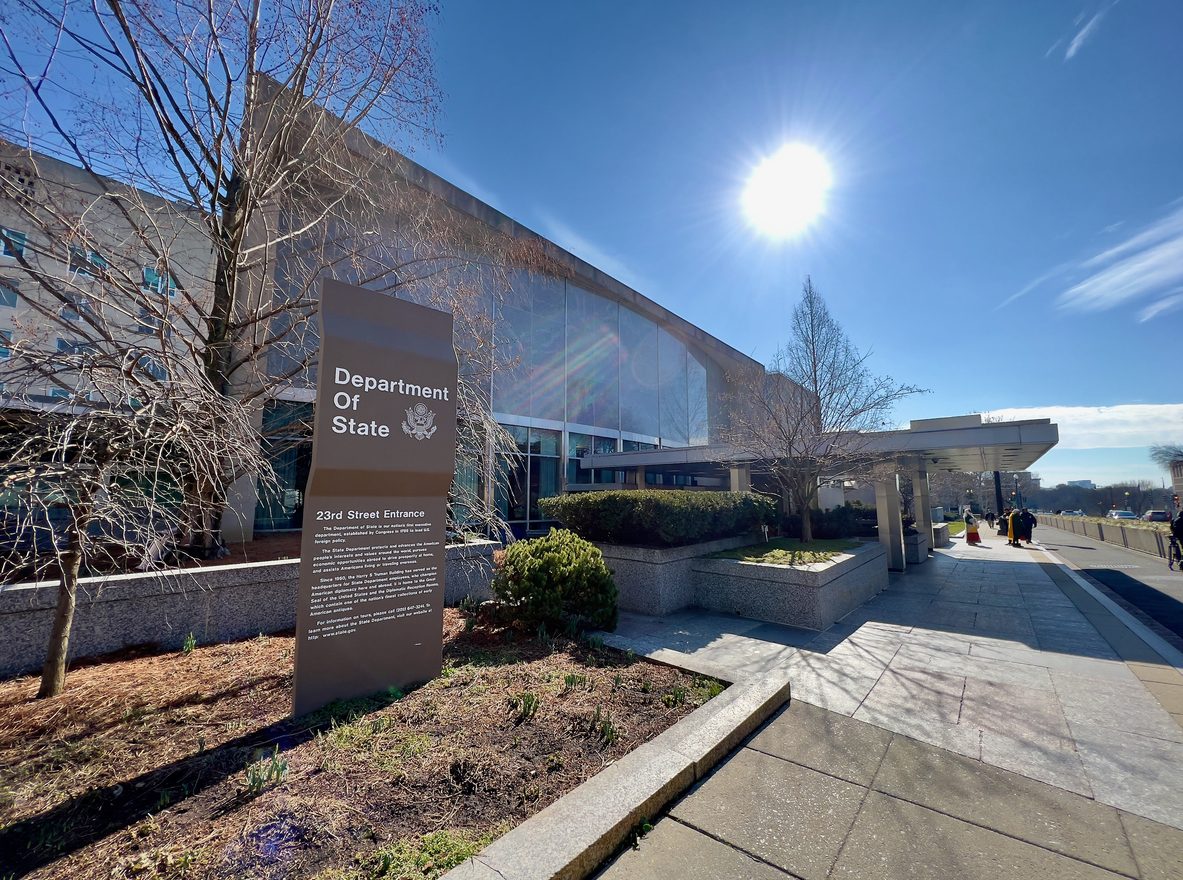
Given the challenging global landscape, with significant democratic backsliding and authoritarianism on the rise in many countries across all regions of the world, it is time to reexamine some basic assumptions of U.S. public diplomacy and our country’s outreach to extremist politicians and political parties. We should similarly rethink who is allowed to travel to the United States to espouse extremist views that undermine our Constitution.
A basic assumption of U.S. diplomacy is that our diplomats should strive to talk to all significant political parties and leaders abroad — whether we agree with them or not — to align their political agendas toward U.S. strategic interests, including our country’s interest in globally promoting human rights and democracy. Other than organizations designated as terrorist entities or individuals subject to U.S. sanctions for their corrupt or violent efforts to undermine democracy and human rights, our diplomats should generally be cultivating friendly (or at least, less adversarial) relationships with all significant political, economic, and cultural leaders abroad. But two recent cases of anti-rights extremists applying to travel to the United States for political purposes suggest that it may be time to reexamine that ecumenical approach to U.S. public diplomacy.
Just this week, Francesco Giubilei, head of the Italian far-right think tank Nazione Futura, and a leader of the extreme-right in Europe, announced that he had been invited by the State Department to participate in an International Visitor Leadership Program (IVLP) tour of the United States organized for “emerging leaders from around the world.” The U.S. Embassy in Italy approved his participation in this prestigious U.S. exchange program and, most likely, nominated him.
Giubilei is a well-known Italian journalist and conservative writer, and the organization he runs, Nazione Futura, is the official think tank of the far-right party that is currently in government and headed by Prime Minister Giorgia Meloni. That is undoubtedly why he was nominated for the IVLP program. But Giubilei, and the extremists in his party, openly oppose the rights of LGBTQI+ persons and reproductive rights, denigrate immigrants and multiculturalism, and espouse Christian nationalism as an organizing principle. He also maintains strong ties to the far-right institutions and leaders that empower Victor Orban’s authoritarian government in Hungary.
Do we really want to pay for extremists of his ilk to travel to the United States with public funds? Do we really think a free trip will moderate his views, or will he simply use his time here to deepen his connections to extremists in the United States to advance anti-democratic ambitions?
The State Department’s IVLP programming is an important tool in U.S. public diplomacy. It pays for up-and-coming political, professional, and cultural leaders from abroad to travel to the United States to meet counterparts here and build life-long connections to our institutions and leaders. U.S. taxpayer investments in these programs over the years have built strong relationships with individuals who have gone on to become global leaders in government, business, journalism, and key cultural institutions. The goodwill and lasting peer-to-peer connections fostered by these programs, which often go underappreciated, are cost-effective investments in people-centered diplomacy.
But in such a polarized world, is bolstering the credentials of those that promote Christian nationalism and oppose the rights of LGBTQI+, women, and other vulnerable populations the direction the U.S. government wants to go?
It, of course, makes sense for our diplomats to talk to everyone, but there is no need to be viewpoint neutral in selecting participants for prestigious IVLP or other public diplomacy initiatives funded through the U.S. government. We should, instead, prioritize investments in participants who champion democracy and human rights for all — the sorts of emerging leaders who would advance the democratic institutions and outlook we seek to promote in the world and who would ultimately advance our country’s long-term strategic interests. Although influential in political circles in Italy today, Giubilei would certainly fail that longer-term test of investing in the change agents we want to see in the world of tomorrow.
Another recent case is even more troubling and calls into question the extent to which we should deny entry into the United States to those who promote even more violent strains of extremism. The Global Project Against Hate and Extremism (GPAHE) issued a warning over the scheduled appearance of Austrian Identitarian leader Martin Sellner and Italian neo-Nazi Guido Taietti at the American Renaissance (AmRen) Conference in Tennessee in November. The conference is a major gathering of white supremacists in the United States. GPAHE reports that “[b]oth Sellner and Taietti have well-documented ties to violent extremism, and their presence is expected to support the growing transnational connections between European and American extreme far-right movements.”
Given Sellner’s and Taietti’s racist and extremist views, their history of violence, and their significant influence across Europe, it is time for the United States to rethink this aspect of our open borders, since both presumably will apply for access to the United States through our visa waiver program, Electronic System for Travel Authorization (ESTA), for which approvals or denials are not permanent. Sellner, in particular, has been associated with the racially motivated murderer in the 2019 Christchurch mass shooting and has significant influence in the white nationalist Identitarian movement that is gaining strength across Europe. He also is now working closely with anti-democratic political parties such as the Austrian Freedom Party and Alternative for Germany, which is under surveillance by the German government.
To the extent visa waiver ineligibilities for racially or ideologically motivated terrorism or extremism exist that could limit Sellner’s and Taietti’s travel to headline a racist conference next month, State Department and Homeland Security officials should consider using them to disrupt this growing and increasingly influential and coordinated transnational network of hate and extremism. If the appropriate authorities lack resources and U.S. officials and the current process are unable to prevent their entry into the country, then the State Department should consider establishing a new, globally applicable visa restriction policy under Section 212(a)(3)(C) of the Immigration and Nationality Act that would apply to individuals responsible for, complicit in, or engaged in serious human rights abuses and other forms of repression or incitement targeting racial, ethnic, religious, or LGBTQI+ persons.
The U.S. Constitution protects free speech by our own residents in the public square, even to some extent if it is racist, homophobic, transphobic, or antisemitic, and it enjoins the rest of us to counter such hate-filled messages with an appeal to the Constitution’s promise of democracy and equal protection. But foreign extremists have no similar right to agitate in our public squares, and in a turbulent world with authoritarianism on the rise, we should think more carefully about who should be allowed into our country to espouse hate and build international coalitions of anti-rights forces that are opposed to inclusive democracy and human rights. Denying a platform to these anti-rights actors is increasingly a matter of our own national security.